
How Long Do Hard-Boiled Eggs Last? The Quick Answer
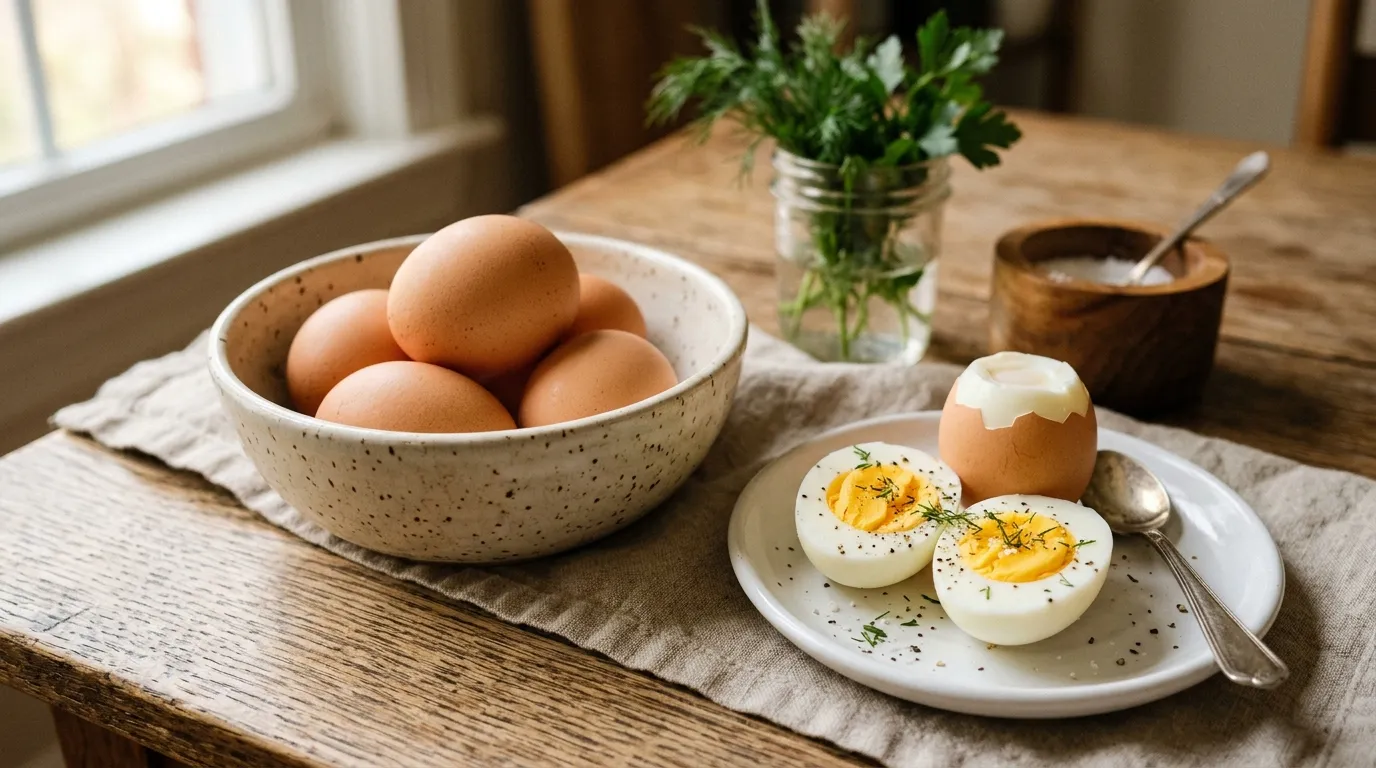
You can keephard-boiled eggsin the fridge for up to 7 days, whether they are peeled or still in their shells. Make sure to refrigerate them within two hours after cooking and keep your fridge at 40°F (4°C) or colder.
At room temperature, hard-boiled eggs are safe for up to two hours. If it’s hotter than 90°F (32°C), the limit is just one hour. Don’t freeze whole hard-boiled eggs, as the whites turn tough and watery after thawing.
Hard-Boiled Egg Storage Time at a Glance
Refrigerator, unpeeled | Up to 7 days | Keep at 40°F (4°C) or below |
Refrigerator, peeled | Up to 7 days | Store covered to prevent drying |
Room temperature | Up to 2 hours | Refrigerate sooner when possible |
Above 90°F (32°C) | Up to 1 hour | Includes hot cars, picnics, and outdoor events |
Freezer | Not recommended | Whites become watery, rubbery, or tough |
Left out overnight | Discard | Refrigerating afterward does not make them safe |
These time limits only work if the eggs were handled cleanly and put in the fridge soon after cooking. If you’re not sure how long an egg has been out, it’s safest to throw it away.
How Long Do Hard Boiled Eggs Last in the Refrigerator?
If you store hard-boiled eggsin the fridge right after cooking, they’ll stay safe for up to a week. The FDA says both peeled and unpeeled eggs have the same seven-day limit.
The shell helps keep the egg from drying out and picking up fridge smells, so unpeeled eggs usually taste and feel better over the week. Peeled eggs are still safe for up to seven days if handled and stored properly, but they dry out faster, so eat them sooner for better texture.
Does the Seven-Day Period Start When You Buy the Eggs?
No. The seven-day period begins when you cook them, not when you purchase the raw eggs.
Write the date you cooked the eggs on the container. This simple step helps you avoid confusion, especially if you keep boiled and raw eggs near each other.
Where Should You Keep Them in the Refrigerator?
Keep hard-boiled eggs on a shelf inside the fridge, not in the door.
The temperature in the fridge door changes every time you open it. A shelf inside keeps the eggs cooler and more stable. Make sure your fridge stays at 40°F (4°C) or below.
How Long Can Hard-Boiled Eggs Sit at Room Temperature?
Don’t leave hard-boiled eggsout at room temperature for more than two hours.
If it’s hotter than 90°F (32°C), the safe time drops to just one hour. Bacteria can grow fast in warm temperatures, even if the egg looks and smells fine.
This rule applies to:
Eggs on a breakfast table
Packed lunches without an ice pack
Picnics and barbecues
Party platters
Easter eggs
Eggs left in a warm car
Eggs cooling on the kitchen counter
Don’t put eggs back in the fridge if they’ve been out too long. Chilling slows bacteria, but it can’t undo growth that’s already happened.
Can You Eat Hard-Boiled Eggs Left Out Overnight?
No. Throw away any hard-boiled eggs left out overnight.
Eggs can have harmful bacteria even if they look, smell, and taste normal. Smelling an egg won’t make it safe if it’s been out overnight.
How Should You Pack Hard-Boiled Eggs for Lunch?
Pack hard-boiled eggs in an insulated lunch bag with a frozen gel pack. Keep the bag out of the sun and away from heat.
The FDA recommends packing cooked eggs with a cold source when taking them to school, work, or a picnic.
Can You Freeze Hard-Boiled Eggs?
It’s best not to freeze whole hard-boiled eggs.
Freezing isn’t a safety problem, but it ruins the texture. Thawed egg whites often turn tough, watery, or rubbery. The USDA says hard-boiled eggs aren’t good for freezing.
Freezing eggs in their shells can also cause cracking as the contents expand.
Can You Freeze Cooked Egg Yolks?
You can freeze cooked yolks by themselves, but most people don’t need to. Take off the whites, put the yolks in a freezer-safe container, label it, and use them in recipes where a different texture won’t be a problem.
For whole hard-boiled eggs, cooking a smaller batch is the better option.
How to Store Hard-Boiled Eggs Properly
Storing eggs properly won’t make them last longer than seven days, but it helps keep them safe and tasting better during that time.
Step 1: Cool the Eggs Promptly
Right after cooking, put the eggs in cold or ice water. This cools them down quickly and prevents them from cooking further.
Don’t let eggs cool on the counter for hours. Make sure to put them in the fridge within two hours after cooking.
Step 2: Dry the Shells
Dry the eggs before storing them. Too much moisture can make a mess and might promote the growth of germs around cracked shells.
Look for cracks as you dry the eggs. Use any damaged ones first and keep them covered.
Step 3: Leave the Shells On When Practical
If you’re making eggs for the week, keep them unpeeled until you’re ready to eat them.
The shell keeps the egg from drying out and picking up fridge smells. Peel eggs right before eating for the best texture.
Step 4: Use a Clean, Covered Container
Put the eggs in a clean container with a tight lid. This keeps out smells and protects them from raw meat, spills, or other messes. Don’t put boiled eggs back in a dirty carton that held cracked raw eggs. Step 5: Store Peeled Eggs Carefully
Put peeled eggs in an airtight container. You can add a clean, slightly damp paper towel to keep the whites from drying out.
Change the paper towel if it dries out or starts to smell. Don’t keep peeled eggs in water for days unless you’re ready to change the water every day and keep things very clean. A dry, covered container is easier and less messy.
Step 6: Label the Cooking Date
Write the date on the container instead of trying to remember it.
Labeling helps you stick to the seven-day rule and keeps old eggs from getting mixed up with new ones.
How to Tell if a Hard-Boiled Egg Has Gone Bad
How long you store eggs matters more than how they look. Throw away any egg that’s been in the fridge for more than a week, even if it seems fine.
Within the recommended storage period, throw the egg away if you notice:
A strong rotten or sour odor
A slimy egg white or shell
A chalky, sticky, or unusually wet surface
Mold or unusual spots
Unexplained discoloration
Liquid leaking from the egg.
A cracked shell combined with uncertain handling
Bad hard-boiled eggs usually smell strong or feel odd, but dangerous bacteria don’t always show. Never taste an egg if you’re unsure about it.
Does a Sulfur Smell Mean the Egg Is Bad?
It’s normal for eggs to have a mild smell after boiling. Cooking makes sulfur compounds that can cause a temporary odor.
A sharp, unpleasant rotten smell is different. Discard the egg when the odor is strong, sour, or clearly abnormal.
Is a Green or Gray Ring Around the Yolk Dangerous?
No. A green or gray ring around the yolk usually means the egg was overcooked or cooled too slowly. It doesn’t mean the egg is spoiled.
The egg may look less appealing, but it can still be safe when handled properly and kept within the seven-day storage period.
Food-Safety Best Practices
Use these habits every time you make hard-boiled eggs:
Wash your hands before and after handling eggs.
Use clean utensils, containers, and work surfaces.
Refrigerate cooked eggs within two hours.
Keep the refrigerator at 40°F (4°C) or colder.
Store eggs away from raw meat and leaking packages.
Use an ice pack when transporting them.
Discard eggs left in heat for more than one hour.
Do not rely only on smell to judge safety.
Eat refrigerated eggs within seven days.
Throw away eggs when their storage history is uncertain.
Pregnant people, older adults, young children, and anyone with a weak immune system can get sicker from foodborne illness. Be extra careful when making eggs for them.
Common Mistakes That Shorten Shelf Life
Leaving Eggs on the Counter Too Long
The 7-day fridge rule only works if you chill eggs right away. Leaving them out for hours can make them unsafe before a week is up.
Storing Peeled Eggs Uncovered
Eggs left uncovered dry out, pick up fridge smells, and are more likely to get spilled on or contaminated.
Keeping Eggs in the Refrigerator Door
Temperature changes at the fridge door can reduce food quality. Use a shelf inside the fridge where it stays cooler.
Forgetting the Cooking Date
You usually can’t tell by looking if a hard-boiled egg is three or ten days old. Labeling removes the guesswork.
Mixing Old and New Batches
If you add new eggs to a container with old ones, it’s hard to know which to eat first. Keep batches separate or mark each egg with a food-safe pencil.
Freezing the Whole Egg
Freezing doesn’t help eggs last longer because thawed hard-boiled whites get an unpleasant texture.
Trusting the Sniff Test Alone
If an egg smells bad, throw it out. But if it doesn’t smell, that doesn’t mean it’s safe. Rely on time and temperature instead.
Eating Decorative Eggs After a Long Display
Decorated eggs still need the two-hour rule. Eggs from outdoor hunts may come into contact with dirt, animals, or unsafe dyes. The FDA says not to eat eggs that have been hidden or used for play.
Frequently Asked Questions
How long do hard-boiled eggs last after peeling?
You can keep hard-boiled eggs peeled in the fridge for up to 7 days if you store them properly in a covered container. The texture might get worse sooner, so eating them earlier is better.
Do hard-boiled eggs last longer peeled or unpeeled?
Both peeled and unpeeled eggs have the same one-week safety limit in the fridge, according to the FDA. Unpeeled eggs usually stay moister and keep their texture better because the shell protects them.
Can you eat a 10-day-old hard-boiled egg?
No. Ten days is longer than the recommended one-week limit. Throw the egg away, even if it looks and smells fine.
Can you eat two-week-old hard-boiled eggs?
No. Two weeks is much longer than the safe storage time for hard-boiled eggs in the fridge.
Can hard-boiled eggs be left out for three hours?
Throw them out if they’ve been at room temperature for three hours. The usual limit is two hours, or just one hour if it’s hotter than 90°F (32°C).
Can I refrigerate hard-boiled eggs while they are still warm?
Yes. Let them cool briefly, then refrigerate them within two hours after cooking.
Yes, but cool them in cold or ice water first. Then refrigerate them within two hours after cooking.
Yes, but briefly cooling them in cold water first helps stop the cooking process and reduce condensation. Do not delay refrigeration beyond the two-hour safety window.
Should hard-boiled eggs be stored in water?
You don’t need to store eggs in water. A clean, covered container is easier. For peeled eggs, a slightly damp paper towel helps keep them from drying out.
Are store-bought peeled hard-boiled eggs good for seven days?
Check the use-by date and storage instructions on the package. Store-bought eggs may be processed differently. Once you open the package, use the eggs within the time the manufacturer says and keep them in the fridge.
How long do hard boiled eggs last in a lunch box?
Eggs will stay safe until lunchtime if you pack them with a frozen gel pack in an insulated lunch bag. Without something cold, stick to the two-hour room temperature rule.
Final Answer: How Long Do Hard Boiled Eggs Last?
Hard-boiled eggs last up to 7 days in the fridge if you keep them at 40°F (4°C) or colder. Both peeled and unpeeled eggs have the same safety limit, but unpeeled eggs usually keep their texture better.
Don’t leave hard-boiled eggs out for more than two hours, or more than one hour if it’s hotter than 90°F (32°C). Don’t freeze whole eggs. Label each batch, keep them on a fridge shelf, and throw out any eggs if you’re unsure how long they’ve been stored.
Write the cooking date on your next batch before putting them in the fridge. This simple habit makes it easier to follow the seven-day rule and helps cut down on food waste and confusion.