
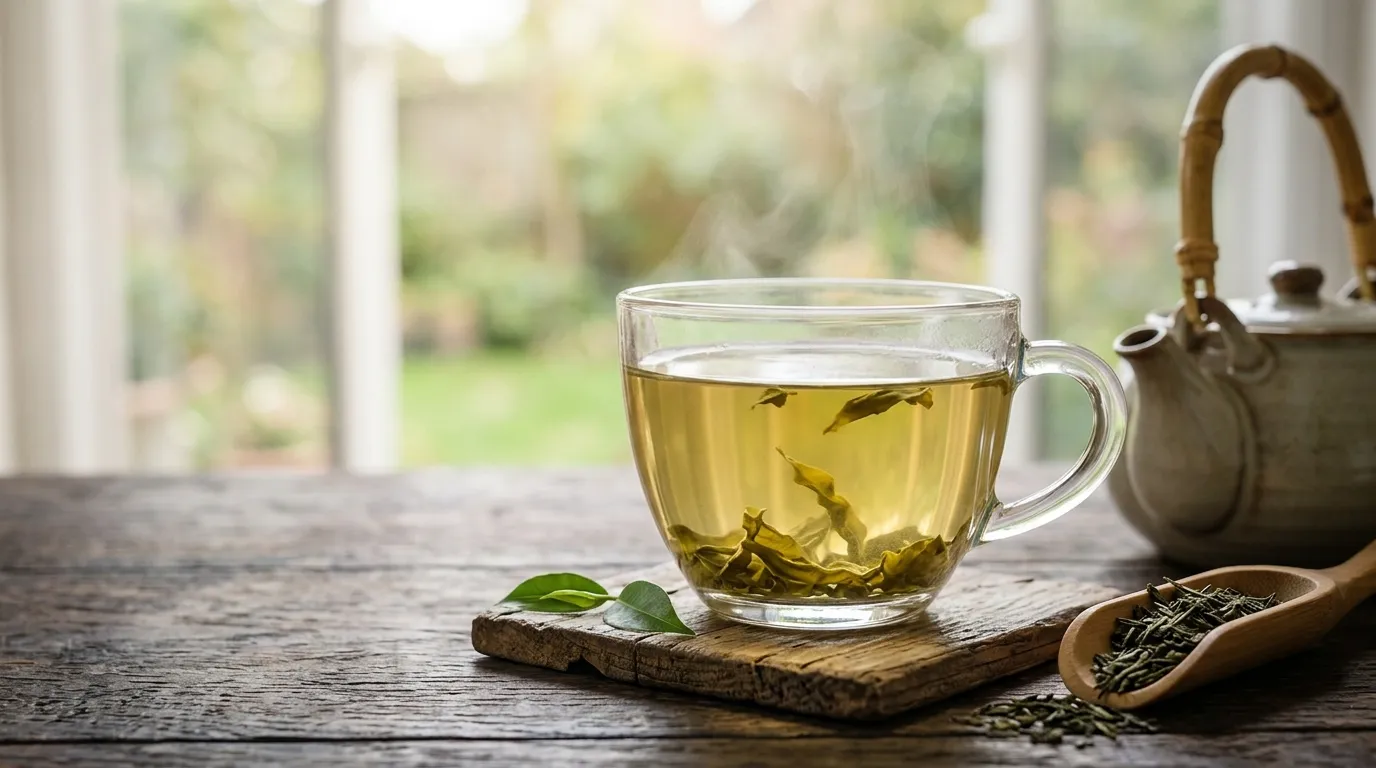
Does Green Tea Have Caffeine?
Yes, green tea contains caffeine.An average 8-ounce cup has about 29 milligrams, which is less than what you’d find in the same amount of brewed coffee or black tea.
The exact amount can vary. Some cups have less, but stronger green teas, bigger servings, and matcha drinks can have much more.
This guide covers how much caffeine is in green tea, what affects the amount, and who might need to limit or avoid it.
How Much Caffeine Is in Green Tea?
An 8-ounce cup of green tea usually has about 29 milligrams of caffeine. According to the FDA, a 12-ounce serving has around 37 milligrams.
These numbers are just estimates. The actual amount in your cup can be higher or lower depending on the product and how you make it.
Using a bigger mug means you’ll get more caffeine. For example, a 16-ounce cup at the same strength has about twice as much caffeine as an 8-ounce cup.
Quick answer
8 ounces of brewed green tea:About 29 mg
12 ounces of brewed green tea:About 37 mg
Strong or large servings:Potentially more
Decaffeinated green tea:A small amount may remain
Matcha:Often more concentrated than regular brewed green tea
If you need an exact number, check the package or ask for nutrition info at the café.
Green Tea Caffeine Compared With Other Drinks
Green tea generally has less caffeine than coffee or black tea. Depending on the brand, it can be similar to some soft drinks.
Beverage | Serving size | Typical caffeine |
Brewed green tea | 8 oz | 29 mg |
Cola | 8 oz | 33 mg |
Brewed black tea | 8 oz | 48 mg |
Energy drink | 8 oz | 79 mg |
Brewed coffee | 8 oz | 96 mg |
Espresso | 1 oz | 63 mg |
Energy shot | 2 oz | 200 mg |
These numbers are just general guidelines. The way you brew, the brand, and the size of your cup can all change the amount of caffeine.
Does green tea have more caffeine than coffee?
No. A typical 8-ounce cup of brewed coffee contains about 96 milligrams of caffeine, compared with 29 milligrams in brewed green tea.
So, coffee usually has over three times as much caffeine per cup. Specialty coffees and bigger servings can have even more.
Does green tea have more caffeine than black tea?
Usually not. An 8-ounce cup of black tea has about 48 milligrams, while green tea has about 29 milligrams.
But the color of the tea doesn’t always show how much caffeine it has. A strong green tea can have more caffeine than a weak black tea. The type of tea, how much you use, and how you make it all play a role.
What Affects the Caffeine in Green Tea?
“Green tea” can mean many different products. Two cups made from different leaves or brewed in different ways might have different amounts of caffeine.
Tea variety and growing conditions
The tea plant, growing conditions, harvest timing, and leaf age can affect caffeine levels. Young leaves and buds often contain more caffeine than mature leaves.
Some Japanese green teas grown in the shade can also have more caffeine. That’s why it’s hard to give one exact number for all green teas.
Amount of tea used
If you use two tea bags instead of one, your drink will have more caffeine. The same goes for adding extra loose leaves without more water.
More tea means more caffeine can dissolve into your drink.
Water temperature
Hotter water pulls more caffeine out of the tea leaves. Studies show that both the temperature and brewing time affect how much caffeine ends up in your cup.
You don’t need boiling water for most green teas. Many taste less bitter if you brew them at the temperature suggested on the package.
Steeping time
Letting your tea steep longer usually means more caffeine gets into the water, especially in the first few minutes.
Taking the tea bag out after a short steep can lower the caffeine compared to leaving it in longer. But it won’t make the tea caffeine-free.
Serving size
Caffeine amounts are usually given for an 8-ounce cup, but many mugs actually hold 12 to 16 ounces.
A large green tea from a café can have much more caffeine than the standard amount listed in nutrition tables, especially if it’s made with several tea bags.
Bottled teas and blends
Bottled green tea can be weaker or stronger than tea you make at home. Some brands also add black tea, matcha, guarana, or extra caffeine.
If caffeine comes from tea, it might not be listed separately on the ingredients. If you need to know the exact amount, check the label or ask the manufacturer.
Does Matcha Have More Caffeine Than Green Tea?
Matcha is green tea, but it is prepared differently.
Regular green tea is made by soaking the leaves in water, then removing them. With matcha, the powder stays in your drink, so you’re drinking the ground tea leaf itself.
Because of this, matcha can have more caffeine than regular brewed green tea. The amount depends a lot on how much powder you use. Studies have found big differences in caffeine levels between matcha products.
A homemade matcha made with less powder can have less caffeine than a large café matcha with several scoops. Check the label or ask at the café about serving size.
Is Decaf Green Tea Caffeine-Free?
No. Decaffeinated green tea is not completely caffeine-free.
Decaffeination removes most of the caffeine, but some can still remain. The FDA says that even decaf coffee and tea can cause symptoms in people who are very sensitive to caffeine.
Look for the difference between these labels:
Decaffeinated:Most caffeine has been removed, but traces may remain.
Caffeine-free:The ingredients do not naturally contain caffeine.
Herbal tea:Usually caffeine-free unless it includes tea leaves, yerba mate, guarana, or another caffeinated ingredient.
If you need to avoid caffeine completely, check the full ingredient list instead of just looking for the word “tea.”
Who Can Drink Green Tea?
Most healthy adults can include green tea in their diet.
The FDA says that up to 400 milligrams of caffeine a dayis generally safe for most adults. This is a maximum, not a goal to aim for.
A few cups of green tea usually add up to much less than that. But remember to include coffee, chocolate, soda, energy drinks, supplements, and medicines in your daily total.
Your own limit might be lower. Some people get sleep problems or jitters after just one cup, while others can drink several cups with no issues.
Who Should Limit or Avoid Green Tea?
Green tea isn’t the best choice for everyone, mostly because of its caffeine content.
People who are sensitive to caffeine
If even small amounts of caffeine cause problems, try decaf green tea or a caffeine-free herbal drink instead.
Jitters or shakiness
Anxiety or restlessness
Headaches
Heart palpitations
Upset stomach
Difficulty falling or staying asleep
If you have these symptoms, the FDA suggests talking to a healthcare professional about your caffeine intake.
People with sleep problems
Even a moderate amount of caffeine can affect sleep if you’re sensitive to it.
If green tea keeps you awake, try drinking it earlier in the day. Decaf green tea can be a better choice in the evening, but it may still contain a small amount of caffeine.
Pregnant people
The American College of Obstetricians and Gynecologists says caffeine intake during pregnancy should stay below 200 milligrams per day. This total includes green tea, coffee, chocolate, soda, and other sources.
Green tea can fit within that limit, but serving sizes and caffeine levels can vary. Talk to your prenatal healthcare provider about your intake.
People who are breastfeeding
Caffeine can pass into breast milk in small amounts. The CDC says that 300 milligrams or less per dayis a low-to-moderate amount for breastfeeding mothers.
Younger and premature babies process caffeine more slowly. Cutting back may help if your baby seems unusually fussy, jittery, or has trouble sleeping.
Children and teenagers
Children under 12 shouldn’t have caffeine regularly. The American Academy of Child and Adolescent Psychiatry says that young people ages 12 to 18 should keep their intake below 100 milligrams per day.
One cup of green tea might be under that limit, but kids can also get caffeine from chocolate, soda, coffee, and some medicines.
People taking certain medicines
Some medicines can make caffeine stay in your body longer or interact with tea.
The FDA recommends talking to a healthcare professional if you take medication or have a condition that could make you more sensitive to caffeine.
Common Mistakes When Estimating Green Tea Caffeine
Assuming all green tea has the same amount
Caffeine amounts can change depending on the brand, type of tea, batch, and how you prepare it.
Confusing green tea with herbal tea
Green tea is made from the tea plant, which naturally has caffeine. Herbal drinks like peppermint or chamomile usually don’t, unless something caffeinated is added.
Treating decaf as caffeine-free
Decaf green tea can still contain a small amount of caffeine.
Ignoring cup size
A cup from a café might be twice as big as the 8-ounce serving size used in caffeine charts.
Assuming matcha is the same as brewed green tea
With matcha, the powdered leaf stays in your drink. It can have more caffeine, depending on how much powder you use.
FAQs
Does green tea have caffeine naturally?
Yes. Green tea naturally contains caffeine because it is made from the leaves of the tea plant. The caffeine is not necessarily added during manufacturing.
How much caffeine is in one cup of green tea?
A typical 8-ounce cup has about 29 milligrams. The amount in your cup can be higher or lower depending on the brand, how much tea you use, water temperature, steeping time, and cup size.
Will green tea keep me awake?
It can. Green tea has less caffeine than coffee, but it might still keep you awake if you’re sensitive or drink it late in the day.
Is green tea lower in caffeine than coffee?
Yes. Brewed green tea averages about 29 milligrams per 8 ounces, compared with approximately 96 milligrams per 8 ounces in brewed coffee.
Is green tea lower in caffeine than black tea?
On average, yes. An 8-ounce cup of black tea has about 48 milligrams, while green tea has about 29 milligrams. The amount can vary from cup to cup.
Does steeping green tea longer increase its caffeine content?
Generally, yes. The longer the tea is in contact with water, the more caffeine is extracted, though the increase isn’t the same for every tea or brewing method.
Can I drink green tea while pregnant?
Green tea can be part of a pregnancy diet if your total caffeine from all sources stays below the recommended limit. ACOG says to keep it under 200 milligrams per day during pregnancy.
Is there a completely caffeine-free green tea?
Regular green tea naturally has caffeine. Decaf versions have much less, but a little may still be there. If you need to avoid caffeine completely, choose a caffeine-free herbal drink.
Conclusion
So, does green tea have caffeine?Yes. An average 8-ounce cup has about 29 milligrams, which is less than coffee or black tea.
The amount in your cup depends on the type of tea, how much you use, brewing temperature, steeping time, and serving size. Matcha and strong café drinks can have more, while decaf green tea has much less but isn’t always caffeine-free.
Most healthy adults can enjoy green tea in moderation. If you’re pregnant, breastfeeding, sensitive to caffeine, taking certain medicines, or giving tea to kids, pay extra attention to total daily caffeine.
Check the serving size and caffeine info on your green tea package before you brew. If it’s not listed, contact the manufacturer or pick a product that clearly shows its caffeine content.